Caleb & Melissa Gibello
Sept-Dec 2026 prayer points
return date to Moka: Sept 1
next step for radio project: official government license needed
transition back into work in Moka well
Holy Spirit speak to the people from His Word
subscribe to receive our email updates
Preach Christ where He had not been known
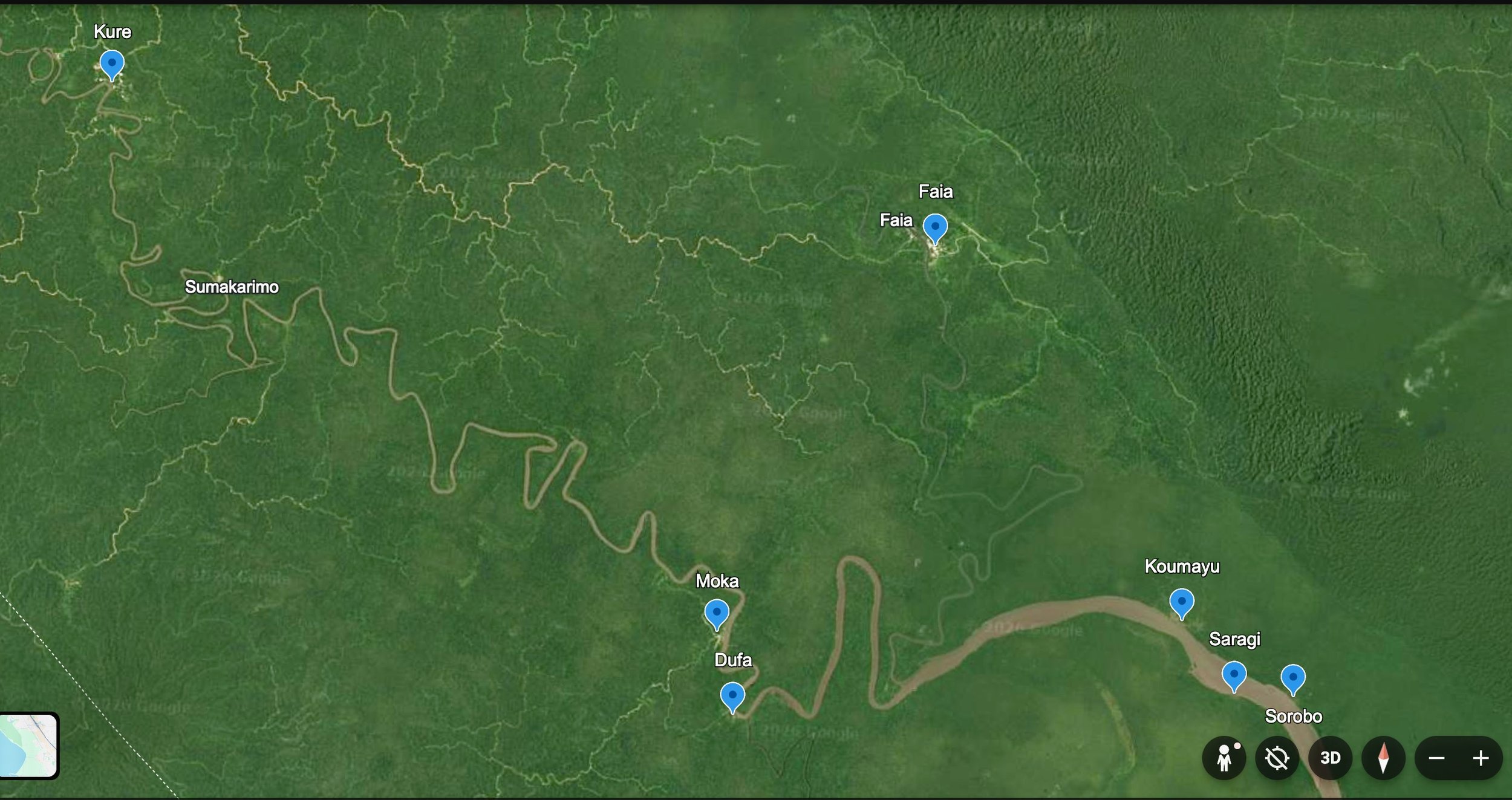
Jesus’ call to missions led our family to Moka, a village on the Turama River in Papua New Guinea’s Gulf Province. We live under Romans 15:20: “It is my ambition to preach the gospel, not where Christ has already been named.” Before 2018 there was no evangelical witness here. That is why we came. That is why we stay.
This site is not a highlight reel. It is raw updates, prayer points, real photographs, and an invitation to stand with us—on river journeys, in machete-cut clearings, under spiritual opposition, and in the long work of seeing the Gospel take root where it had never been proclaimed.
How we came
In January 2018 we stepped onto the Moka riverbank with our toddlers, Elijah and Bella, carrying the legacy of two generations who had done pioneer work elsewhere in PNG. Our New Jersey sending church commissioned us. Early gifts helped raft our first supplies upriver.
We left the comforts of America for thatched houses on stilts above crocodile-inhabited shallows—no roads, no electricity, and a spiritual world shaped by animism and sorcery. We came to learn an unwritten language, translate Scripture, preach house to house, and labor toward biblical churches led by local believers. None of those churches exist yet in Moka or the other Turama villages. Planting them remains our long aim.
Building a way in
Our first major project with the village was an airstrip. For eight years we cleared it by hand—axes, shovels, no machines. Hundreds of trees came down. There were venomous snakes in the grass and falling limbs overhead. Melissa prayed constantly for the working people.
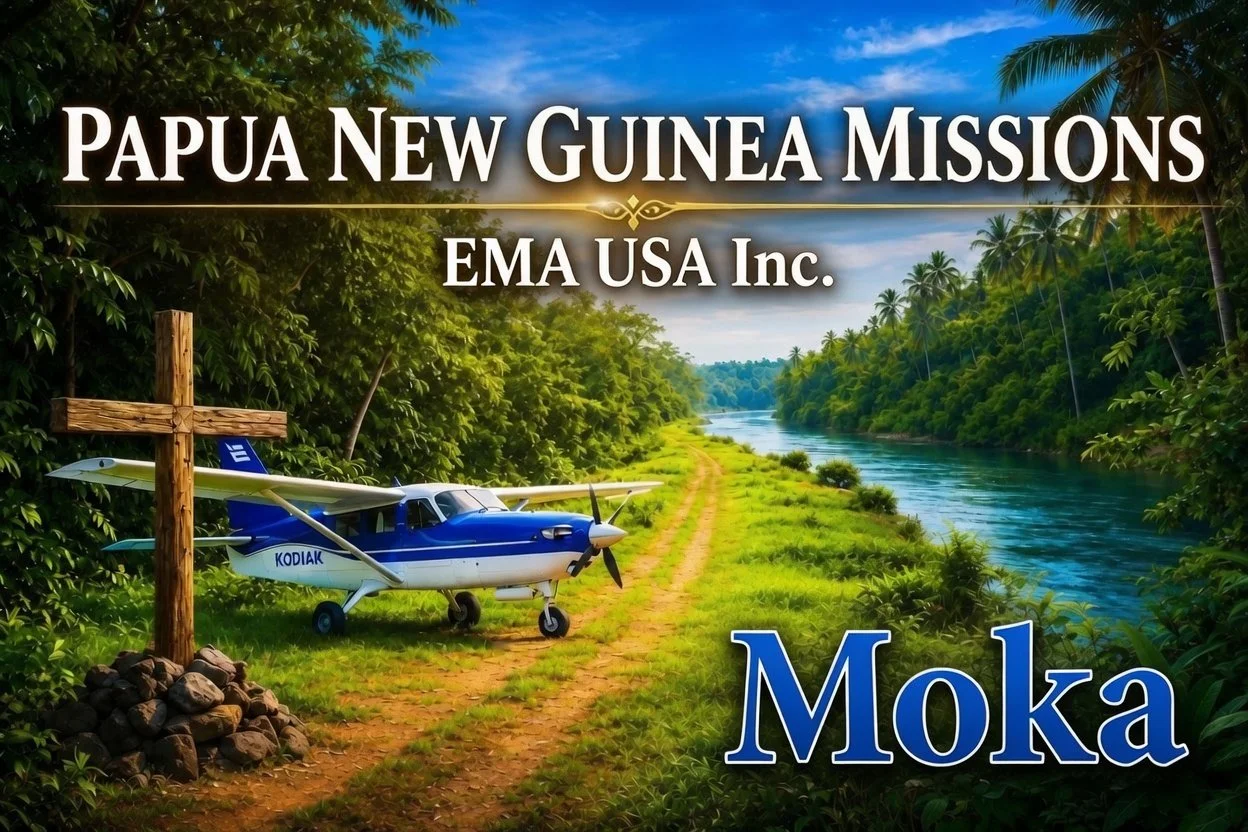
By November 2024 a 515-meter grass runway was finished. The first landing turned a five-to-seven-day emergency boat trip into a 25-minute flight. Cargo, medical help, and Gospel workers can now reach this river without weeks on the water.
The Word in their language
Bit by bit we have translated Jonah, Ruth, 1 Timothy, and the Gospel of Mark into Moka’s mother tongue, along with literacy primers villagers are reading for the first time. We travel by dinghy to outlying villages, sometimes with the boat packed full. In Dufa we once sat under a sagging, rain-soaked house and taught Luke 10:21–22, watching understanding grow where there had been only blank stares. Home visits—woven mats, sago, river fish—have opened rooms for families to hear the Gospel for the first time.
Melissa treats the sick at her clinic. Every wound dressed in Jesus’ name is love offered to a neighbor, and often the first quiet step toward a conversation about the soul. Elijah and Bella are growing up in the middle of it: river trips, brush-clearing, the primers, and parents who must live what they preach.
The cost
Sorcery and old spiritual practices are still common. Gatherings have met real resistance. We have known danger in the grass and on the water, isolation, the ache of furlough, and grief—including the death of a child in a crocodile attack. We do not tell these things to impress anyone. We tell them because this work is weak on purpose.
Philippians 4:6 and 2 Corinthians 12:9 hold us: “My grace is sufficient for you, for my power is made perfect in weakness.” We are not accomplishing this by our own strength. God is sovereign here. The Gospel advances because He is kind, not because we are remarkable.
Where we are now
By God’s providence we flew back into Moka on September 1, 2026. The weather was good. The airstrip held. The house stood. The people received us as family coming home. Caleb is preaching again from the Gospel of Mark. Melissa is back at the clinic. Translated Scripture is in the village even when we cannot be in every house.
Please pray that the airstrip would hold against the jungle, that the Word already in their language would keep working, and that the Lord would open hearts as the Gospel is preached.
What we ask of the years ahead
We will keep reaching villages along the river and deepening teaching in the mother tongue. Our goal has not changed: functioning churches in the local language, led by qualified local believers, sustained by Scripture. The heavy clearing is largely behind us. The longer work remains—seeing sinners come to faith in Christ and churches take root where none have stood.
We are ordinary people with mud on our boots and a boat motor that does not always start. Through this site we share updates, prayer needs, ways to give, and honest glimpses of daily life in Moka Table Talk—the humor, Moka Mission Minute, the hard days, and the conviction that this work depends on God.
We do not point to what we have done. We point to what Christ has done, and is still doing, in a place that had not heard His name. If the Lord is drawing you to pray, give, or walk with us, we would be glad to have you stand here too.